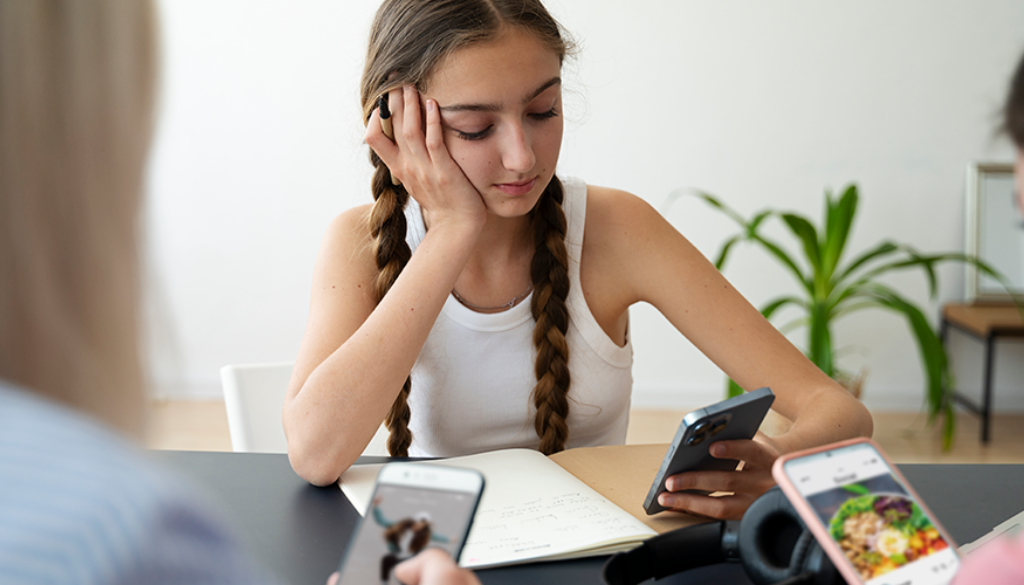
Mental Health and Social Media
Mental health and social media are closely connected in today’s digital world. Social media connects us to people and information worldwide. But as our digital presence grows, so does awareness of this complex relationship. This blog explores how social media affects mental well-being, both positively and negatively. It also offers practical tips for maintaining a healthy online presence.
Schedule an appointment to get started.
The Positive Effects of Social Media on Mental Health
Social media helps people stay connected with friends, family, and support networks, even over long distances. For those facing loneliness or isolation, it can provide community and a sense of belonging. Platforms like Instagram and TikTok are also used to spread mental health awareness. Influencers and healthcare providers share information and coping strategies, helping reduce stigma. Many also find that social media offers a valuable outlet for creativity and self-expression. This can provide a positive boost to self-esteem and emotional well-being.
The Negative Effects of Social Media on Mental Health
Social media often highlights curated, idealized versions of people’s lives. This can lead to social comparison and feelings of inadequacy. Studies show that prolonged exposure to idealized content may trigger symptoms of depression, especially among young users. Fear of missing out (FOMO) is another concern. Constant exposure to others’ activities can heighten anxiety and lead to compulsive checking. Cyberbullying is also a serious risk. Online harassment can cause lasting harm to mental health, self-esteem, and social functioning. Finally, excessive screen time—especially at night—can disrupt sleep. Poor sleep increases anxiety, irritability, and depressive symptoms. According to NAMI, social media use patterns significantly influence mental health outcomes.
Warning Signs to Watch For and When to Seek Help
It’s important to notice when social media starts to negatively affect your mental health. Signs include increased anxiety, feelings of loneliness or depression after using social media, sleep disruptions from late-night scrolling, and decreased self-esteem. If you notice these signs, consider limiting your screen time and setting healthy boundaries. Our therapists can help you develop strategies for a healthier relationship with social media. Contact us to take the first step toward better mental health.
- Social Comparison and Low Self-Esteem- Often highlights curated, idealized
versions of people’s lives. This can lead to social comparison, causing feelings of
inadequacy and low self-esteem. Studies show that prolonged exposure to
idealized content may trigger symptoms of depression, especially among young
users. - Fear of Missing Out (FOMO)-feeling that others are having more fun or leading
more successful lives. Constant exposure to others’ activities can heighten
anxiety and lead to compulsive checking, which exacerbates feelings of
exclusion and dissatisfaction. - Cyberbullying and Online Harassment-While social media connects us, it also
exposes users to cyberbullying. For those who experience online harassment,
social media can become a source of anxiety, fear, and distress. The impact of
cyberbullying can be long-lasting, affecting mental health, self-esteem, and social
functioning. - Sleep Disruption and Mental Health-Excessive screen time, especially late at
night, can disrupt sleep, which is crucial for mental health. Poor sleep is
associated with increased anxiety, irritability, and depressive symptoms, creating
a negative cycle that affects overall well-being.
Recognizing When Social Media is Affecting Your Mental Health
It’s important to recognize when social media starts to negatively affect your mental
health. Signs to watch for include:
• Increased anxiety, especially related to comparing yourself with others
• Feelings of loneliness or depression after using social media
• Sleep disruptions due to late-night scrolling
• Decreased self-esteem or increased self-criticism